
Why Homeownership Still Matters in 2026 | Smart N Loans
Does homeownership still matter in Florida in 2026? Yes, for many people, but owning is not automatically better than renting. The more useful question is whether a particular home, its complete monthly cost, your expected time there and your financing fit your life without putting unnecessary pressure on the rest of your finances.
Most people do not remember the exact interest rate they locked years later.
They remember the first night in the house. The sound of unpacking boxes. Empty rooms echoing before the furniture arrived. The moment a property started feeling like theirs.
We still remember our first home.
It was not perfect. The flooring needed updating, the kitchen looked dated, and projects seemed to appear everywhere we turned.
But it became home.
It became the place where routines started. Morning coffee before work. Family dinners after long days. Conversations about finances, children, careers and what came next.
Over time, the house changed. So did life.
That experience continues to shape how we think about home financing today. Behind a mortgage application is usually something much bigger than a loan. A buyer may be looking for stability, more control over where and how they live, room for a changing household, or a place they hope to stay long enough to make ownership worthwhile.
In Florida in 2026, those goals need to be balanced against real costs. Property taxes, homeowners insurance, possible flood insurance, association expenses, maintenance and financing can materially change what a home actually costs.
Quick Takeaway
Do not ask only, “Can I qualify for this house?”
Ask, “Does the complete cost of owning this house fit comfortably into the life and budget I want?”
That is a stronger starting point for responsible homeownership planning.
What You'll Learn
Why homeownership still matters
What a fixed mortgage payment does and does not make predictable
How home equity may build over time
Eight questions to test your homeownership readiness
The true monthly cost of a Florida home
Florida-specific tax, insurance and condo considerations
Why waiting for the “perfect” mortgage rate may be the wrong question
When renting may still make sense
Common Florida homebuying mistakes
A practical framework for deciding what comes next
1. Why Does Homeownership Still Matter?
For many households, homeownership matters because it combines a place to live with greater control over that living environment and the potential to build equity over time.
That does not mean buying is automatically a better financial decision than renting. It does not guarantee appreciation, wealth, lower monthly costs or financial security. Ownership creates a different set of benefits, responsibilities and risks.
Homeownership may offer | Homeownership also requires |
|---|---|
Greater control over your living space | Responsibility for repairs and maintenance |
Potential to build equity over time | Exposure to changes in property value |
Stable principal and interest with many fixed-rate mortgages | Taxes, insurance and association costs may still change |
More freedom to personalize the property, subject to applicable rules | Transaction costs and potentially less flexibility to move quickly |
A property that may become a long-term asset | A substantial long-term financial obligation |
If you are trying to determine what ownership could realistically look like for your budget, our Florida mortgage affordability guide goes deeper into the difference between qualifying for a mortgage and choosing a payment that feels sustainable.
2. Predictability Can Matter, but a “Fixed Payment” Needs Context
One reason people are attracted to homeownership is predictability. With a typical fully amortizing fixed-rate mortgage, scheduled principal and interest generally remain stable over the loan term when payments are made as agreed.
But principal and interest are not the same thing as your complete housing cost.
Property taxes can change. Homeowners insurance premiums can change. Flood insurance may apply. HOA or condominium dues can change. Maintenance rarely arrives on a convenient monthly schedule.
The Consumer Financial Protection Bureau's home affordability guidance recommends looking beyond principal and interest when evaluating what you can comfortably spend on a home.
Florida Buyer Reality Check A comfortable principal-and-interest payment does not necessarily mean a comfortable total housing budget. Before committing to a property, investigate property-specific taxes, insurance, association expenses and likely maintenance needs.
3. Homeownership Can Build Equity, but Equity Is Not Guaranteed Profit
Equity is the portion of a property's value that is not offset by debt secured by the property.
With an amortizing mortgage, paying principal can reduce the loan balance over time. If the property's value rises, equity may also increase. If its value falls, equity can decrease.
That is why it is more accurate to describe homeownership as having equity-building potential rather than promising that a home will create wealth.
For some homeowners, accumulated equity may later provide financial flexibility through a future sale or, when appropriate and subject to qualification, certain home-equity financing options. Borrowing against home equity creates new debt, costs and repayment obligations.
You can explore Florida mortgage programs available through Smart-N-Loans to learn about different purchase, refinance, investor, self-employed and retirement-focused financing categories.
4. The Florida Homeownership Fit Check
Instead of asking whether 2026 is universally a “good year to buy,” consider these eight questions. They can help identify what you already know and what may need more planning.
How Many of These Feel True for You?
1 Your timeline makes sense. You expect to stay in the area long enough to seriously consider ownership.
2 Your finances are reasonably stable. Your income or other financial resources give you a workable planning foundation.
3 Your budget has breathing room. You are thinking beyond principal and interest when estimating affordability.
4 You have considered Florida costs. Property taxes, insurance and HOA or condo expenses are part of your calculation.
5 You can preserve reserves. Buying would not require using every available dollar just to reach closing.
6 You are planning for ownership. Repairs, maintenance and unexpected property expenses are part of the budget.
7 You know why you want to buy. Your reason goes beyond headlines or fear of missing out.
8 Sustainability matters more than prediction. You are focused on a payment that works rather than trying to guess the perfect market.
Turn the unanswered questions into your planning list.
You do not need eight perfect answers. If several areas feel uncertain, those are useful topics to investigate before you start seriously shopping.
This educational exercise does not determine mortgage eligibility, affordability or whether purchasing is financially appropriate. Qualification depends on the borrower, property, loan program, underwriting and applicable lender and program guidelines.
If you are approaching the point where you want a clearer price range, learn more about Florida mortgage pre-qualification and what an early financing review can and cannot tell you.

A realistic homeownership budget considers much more than principal and interest.
5. What Is the True Monthly Cost of Owning a Florida Home?
One of the easiest mistakes to make is comparing rent with only the principal-and-interest portion of a proposed mortgage payment. A more useful comparison starts with the complete housing picture.
Build Your Florida Housing Budget
Mortgage principal and interest
Property taxes
Homeowners insurance
Flood or other applicable insurance
Mortgage insurance, when applicable
HOA or condominium dues
Expected utilities
Routine maintenance
A reserve for larger repairs and replacements
Cash needed before and at closing deserves its own planning. A down payment and closing costs are not the same expense. Our Florida Down Payment vs. Closing Costs guide explains the difference and questions to ask when estimating cash needed for a purchase.
A lender's maximum qualifying amount and the amount you personally feel comfortable spending do not have to be the same number.
6. Florida Buyers Have a Few Extra Questions to Ask
Florida homeownership is highly property-specific. Two similarly priced homes can produce meaningfully different ownership costs.
Property Taxes and Homestead Planning
Do not assume the seller's current property-tax bill will become your future tax bill. A change in ownership can affect assessed value, and eligible Florida homeowners may qualify for homestead-related benefits after establishing the property as their permanent residence.
See our Florida Homestead Exemption and Property Tax Guide for a deeper explanation.
Homeowners and Flood Insurance
Property-specific insurance information should be obtained early enough to influence the purchase decision. Premiums, deductibles, coverage availability and flood considerations can materially affect affordability.
HOA and Condominium Costs
If you are considering a condominium or association-governed property, look beyond the monthly dues. Association expenses, potential assessments, insurance, reserves and property eligibility can matter depending on the property and financing program.
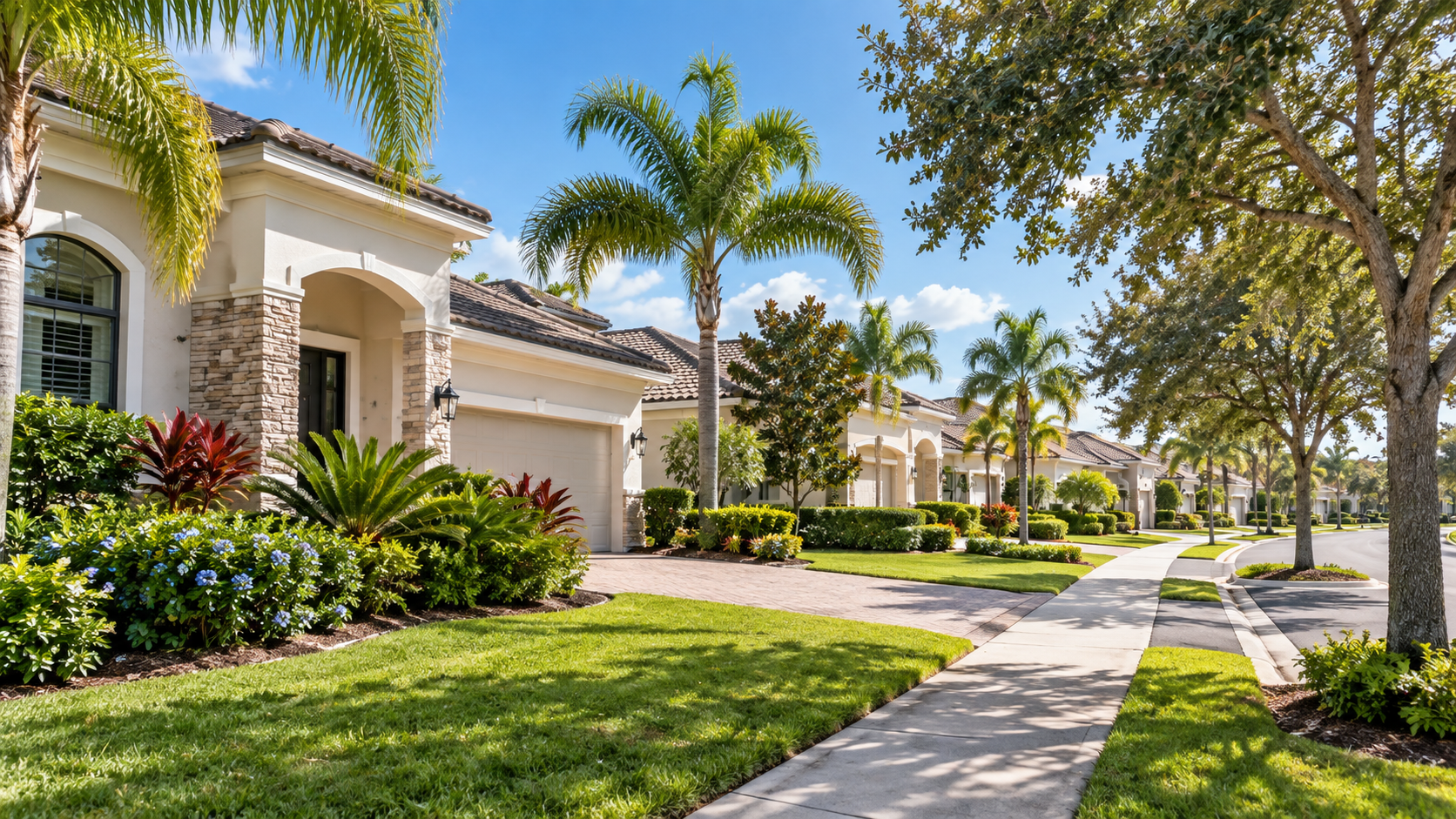
Taxes, insurance, association expenses and property characteristics can make the cost of owning one Florida home different from another.
7. Should You Wait for the “Perfect” Mortgage Rate?
Mortgage rates matter because they affect borrowing costs and monthly principal and interest. But the interest rate is only one part of a homebuying decision.
A buyer also needs to consider the home's price, expected time in the property, cash required at closing, total monthly housing cost, financial reserves, property condition and whether the home actually supports the household's plans.
Future refinancing should not be assumed. Rates may rise or fall, and a future refinance would depend on market conditions, property value, borrower qualifications, costs and applicable lender and program guidelines at that time.
A Better Question to Ask If I never get the future mortgage rate I am hoping for, am I still comfortable owning this home under the financing terms available to me today?
For more context, read Florida Mortgage Market Trends and our guide to Smart Mortgage Planning for Florida Borrowers.
8. When Might Renting Still Make More Sense?
Homeownership can be meaningful without being the right next move for every household.
Renting may deserve serious consideration if you expect to move relatively soon, your employment or income is changing, purchasing would consume most of your emergency savings, the complete ownership cost strains your budget, or you value flexibility more than control over the property right now.
Buying because you feel pressured by headlines, friends, family or fear of missing out is not a financial plan.
Sometimes the productive next step is buying. Sometimes it is strengthening cash reserves, reducing debt, understanding credit or deciding where you actually want to live.
If buying remains your goal, our FHA vs. Conventional Loans in Florida guide can help explain why the financing structure matters alongside the interest rate.
9. Common Florida Homebuying Mistakes to Avoid
Shopping by purchase price alone. Compare the complete monthly housing cost.
Using the seller's tax bill as your future estimate. Investigate how the purchase may affect assessed value and taxes.
Getting insurance information too late. Property-specific insurance costs can materially affect affordability.
Assuming a future refinance will solve an uncomfortable payment. Future rates and eligibility cannot be guaranteed.
Spending every available dollar at closing. Homeownership comes with repairs, replacements and unexpected expenses.
Ignoring condo or HOA considerations. Dues, assessments, insurance and property eligibility can affect the transaction.
Confusing qualification with comfort. A loan amount for which you may qualify is not automatically the amount you should choose to spend.
10. A Better Way to Decide
If you are trying to determine whether homeownership fits your life in 2026, work through the decision in a practical order.
1
Start with your life.
Why do you want to own, and how long do you expect the home to fit your plans?
2
Set a comfortable housing budget.
Decide what leaves room for savings, emergencies and your other priorities.
3
Estimate the complete ownership cost.
Include taxes, insurance, association expenses and maintenance.
4
Review financing possibilities.
Compare available programs based on your income, assets, credit, goals and property type.
5
Compare actual properties.
Taxes, insurance, association expenses and property condition can vary substantially from one home to another.
6
Make the decision without relying on predictions.
The purchase should make sense based on information available today, not a promised future rate or appreciation forecast.
Not Sure Which Financing Path Fits? Start with the Smart-N-Loans Florida Mortgage Programs page to explore financing categories, or read about Florida mortgage pre-qualification if you are still early in the process.
Frequently Asked Questions
Is buying a home in Florida worth it in 2026?
It depends on the buyer, property and timeline. Homeownership may provide greater housing control and equity-building potential, but buyers also assume responsibility for financing costs, taxes, insurance, maintenance and other ownership expenses.
Is it better to rent or buy in Florida?
Neither is automatically better. Renting can provide flexibility and reduce responsibility for major property repairs. Buying may provide greater control and equity-building potential. Your timeline, cash reserves, monthly budget and property-specific costs should drive the comparison.
Does a fixed-rate mortgage mean my total housing payment never changes?
No. Scheduled principal and interest may remain stable, but property taxes, homeowners insurance, flood insurance, mortgage insurance when applicable, and HOA or condominium expenses may change.
Should I wait until mortgage rates fall?
Future mortgage rates cannot be predicted with certainty. Evaluate whether the home and financing available today fit your budget and plans rather than depending on a future rate or refinance.
Does buying a home guarantee that I will build wealth?
No. Principal reduction may help build equity and property values can rise, but values can also fall. Transaction costs, interest, maintenance, taxes, insurance and length of ownership all affect the financial outcome.
How much cash should I expect to need to buy?
The amount depends on the loan program, property and transaction. Down payment and closing costs are separate expenses. See our Florida Down Payment vs. Closing Costs guide for more detail.
How do I know what mortgage payment is actually comfortable?
Start with your household budget rather than a maximum loan amount. Include housing expenses, existing debts, savings goals, emergency reserves and normal living expenses. Our Florida mortgage affordability guide can help you work through those considerations.
The Part of Homeownership People Remember
Years after closing, most homeowners will not remember every disclosure they signed.
They remember what happened in the home.
The first dinner. The unfinished project that took three weekends instead of one. Morning coffee. Birthdays. Dogs in the backyard. Conversations around the kitchen table. The ordinary routines that eventually become the story of living there.
That personal value is real, but it should sit beside sound financial planning, not replace it.
For us, that is what responsible mortgage education is about: understanding both sides of the decision clearly enough to choose what fits your life.
Still Deciding Whether Buying Fits Your Plans?
You do not need to be ready to apply to have a useful mortgage conversation.
Kelly or Ray can help you review the financing side of a Florida home purchase, including payment structure, possible financing options and questions worth investigating before you move forward.
No pressure and no obligation to apply.
Kelly Nadeau | NMLS #1027618
Ray Nadeau | NMLS #1027617
Mortgage Loan Officers | Licensed in Florida
Equity Smart Home Loans | NMLS #856170 | DRE #01906808
1499 Huntington Dr., Suite 500, South Pasadena, CA 91030 | Equal Housing Lender
Not a commitment to lend. All loans are subject to credit approval, underwriting, property eligibility and applicable lender and program guidelines. Rates, fees, programs and availability are subject to change without notice. Not all applicants will qualify. Refinancing may increase total finance charges over the life of the loan.
This article is for general educational purposes and is not legal, tax, investment or financial advice. Consider consulting qualified professionals regarding your individual circumstances.
Trusted Network Resources
Smart-N-Loans.com | CertainlySold.net | FLHomesMagazine.com | ElderPlacement.Agency | AgencyAILab.com
Related Guides and Next Steps
About the authors. Kelly Nadeau, Licensed Florida Broker BK3344334, NMLS #1027618, and Ray Nadeau, Licensed Florida Broker BK3344407, NMLS #1027617, are licensed Florida mortgage loan originators with Equity Smart Home Loans serving Central Florida. Questions? Call 321-321-9455.
Last updated: October 2026. This article is general information, not legal, tax, or financial advice, and is not a commitment to lend.
Real Estate Services: Certainly Sold provides real estate brokerage services in the State of Florida. Florida Broker Lic. #BK3344407. Equal Housing Opportunity.
Mortgage Services: Mortgage financing services are offered through Equity Smart Home Loans, CA NMLS #856170, DRE #01906808, 1499 Huntington Dr Suite 500, South Pasadena, CA 91030 (Florida license MBR-2341). Ray Nadeau, Mortgage Loan Originator, NMLS #1027617. Kelly Nadeau, Mortgage Loan Originator, NMLS #1027618. All loan programs, terms, eligibility and approvals are subject to borrower qualification, property qualification, underwriting guidelines, condominium project requirements, lender requirements, and program availability. Not all borrowers, properties, or condominium projects will qualify. Nothing on this website constitutes a commitment to lend or a guarantee of financing.
Real Estate & Mortgage Services Disclosure: Real estate brokerage services and mortgage financing services are separate services. Consumers are not required to use Equity Smart Home Loans or any particular mortgage lender as a condition of listing, selling, purchasing, or otherwise using Certainly Sold's real estate brokerage services. Consumers are free to choose the lender and other settlement service providers of their choice.
Condo Financing Disclosure: Condominium financing availability may depend on borrower qualifications, property characteristics, condominium project eligibility, association financials, insurance coverage, reserves, special assessments, litigation, occupancy, and individual lender/program requirements. References to alternative or specialized financing options do not mean every borrower, property, or condominium project will qualify.
Condo Value & Saleability Review Disclosure: Any property value, condo value, comparative market analysis, or saleability review provided through this website is for informational purposes only and is not an appraisal. No representation or guarantee is made regarding a property's market value, eventual sales price, financing availability, or successful closing.
Ray Nadeau · Licensed Florida Broker BK3344407 | Kelly Nadeau · Licensed Florida Broker BK3344334